The 5 Best Performance Management Tools for Continuous Feedback
You're evaluating performance management platforms because annual reviews no longer capture how your team actually works. The shift to continuous feedback has exposed rigid tools that can't keep pace with weekly check-ins and real-time coaching moments. By the end of this article, you'll have five concrete options ranked by feedback mechanisms, goal alignment, and review flexibility, plus a clear #1 pick that integrates these capabilities into one workflow. You'll also know which criteria matter most for your team size and budget before you commit to a demo.
What to Look For in Performance Management Tools for Continuous Feedback
To build a culture of continuous feedback, your performance management tool must excel in real-time feedback, goal alignment, and actionable insights. The right platform turns everyday conversations into structured data that drives employee growth.
Focus on tools that make giving feedback effortless, connect individual work to broader objectives, and translate input into meaningful performance trends. These three pillars separate simple feedback software from true performance management systems.
Real-Time Feedback Mechanisms
Real-time feedback tools allow managers and peers to share input instantly, reducing the lag between action and reaction. This immediacy matters because feedback loses its power when it arrives weeks later in a formal performance review.
Look for platforms with mobile accessibility and a simple interface. If giving feedback requires navigating complex menus, employees simply will not use it. The best tools let users share input quickly, right from their phone.
Tagging specific projects or behaviors adds context that makes feedback more useful. Instead of a vague comment like "good job," employees receive notes tied to a particular deliverable or interaction. This specificity turns recognition into a learning moment.
Instant notifications and inline commenting keep conversations flowing. When a colleague receives a kudos or a suggestion, they can respond immediately, creating a genuine feedback loop. Research suggests this real-time exchange significantly boosts employee engagement and accelerates skill development.
Goal Alignment and OKR Tracking
Effective performance management tools align individual goals with company objectives through transparent OKR tracking. This connection ensures that daily work contributes to the bigger picture, which drives motivation and clarity.
Seek software with clear OKR setting and progress tracking features. Teams should see how their efforts move key metrics, and leadership should have visibility into how work cascades across departments. This transparency reduces duplication and focuses energy where it matters most.
Goal alignment becomes even more powerful when feedback links directly to objectives. When praise or coaching references a specific OKR, employees understand exactly which behaviors drive success. This connection transforms generic feedback into targeted guidance for performance improvement.
Regular progress check-ins supported by goal tracking software help teams course-correct early rather than discovering issues during formal performance appraisals. This ongoing rhythm of feedback and adjustment supports employee development and strengthens the overall feedback culture across the organization.
1. HeyRamp - Best Overall
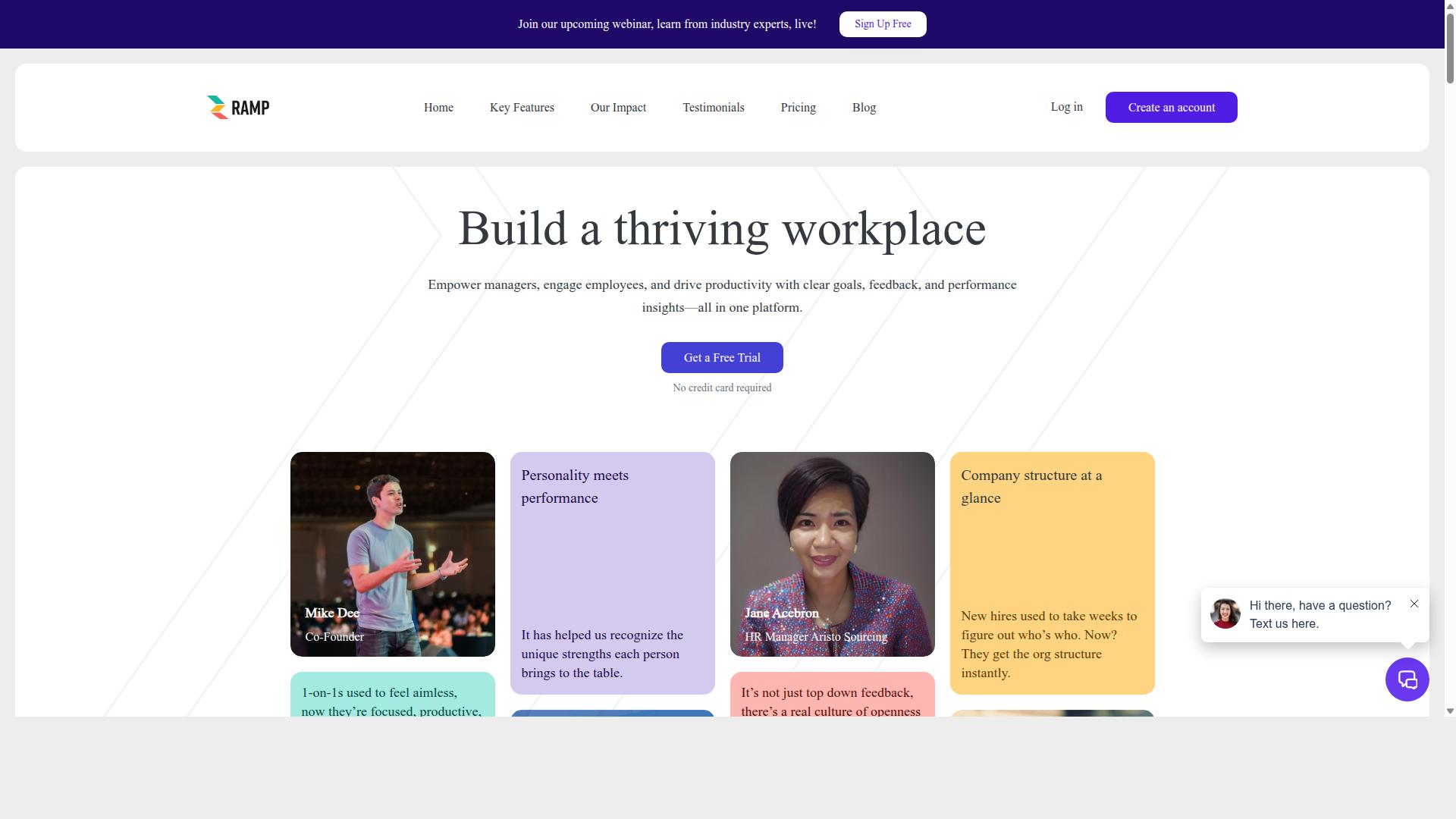
HeyRamp stands out as the best overall performance management tool for continuous feedback, offering an all-in-one platform that integrates feedback, reviews, and team development. It is designed for organizations that want to move beyond annual performance appraisals and build a genuine feedback culture. The platform combines multiple capabilities into one subscription, which reduces the need to juggle separate feedback software, review tools, and coaching apps.
What makes HeyRamp particularly effective is its focus on the entire employee development lifecycle. It supports company structure visualization, performance reviews, OKR and goal management, and personality insights all in one place. This means managers and team members can track progress, share feedback, and plan growth without switching between disconnected systems.
The tool also includes guided conversation templates, coaching tips, sentiment prompts, and automated reminders. These features help teams maintain a consistent feedback cadence, which is essential for building a strong feedback culture. With people analytics dashboards and leadership insights, organizations can spot trends and address issues before they become problems.
For teams seeking a practical, all-in-one approach to performance management, HeyRamp delivers the structure and flexibility needed to support continuous feedback and employee growth.
Integrated Feedback and 1-on-1 Meeting Tools
HeyRamp's integrated feedback and 1-on-1 meeting tools streamline continuous feedback and coaching. The 1-on-1 meeting tools come with organized agendas and action tracking, so every conversation has a clear purpose and follow-through. Managers can prepare structured discussions that focus on employee development, goal progress, and any challenges the team member is facing.
Feedback is woven directly into the meeting workflow. Instead of collecting manager feedback in one system and discussing it in another, everything lives in the same platform. This integration makes it easier to reference past feedback loops, track improvements, and maintain a clear record of coaching conversations over time.
The platform also includes confidential manager notes and KPI snapshots. These features allow leaders to document observations privately while keeping key performance metrics visible. When it is time for performance reviews, all of this context is available in one place, which reduces preparation time and improves the quality of the conversation.
Built-in training videos for 1-on-1s, performance reviews, and personality testing help managers build their coaching skills. This combination of structured tools and learning resources makes HeyRamp a practical choice for teams that want to turn regular check-ins into meaningful employee development opportunities.
Pricing and Global Accessibility
HeyRamp offers competitive pricing and global accessibility, making it a cost-effective choice for organizations worldwide. The monthly plan is $5.00 per seat, paid monthly, while the yearly plan drops to $3.00 per seat per month, paid annually. For larger organizations, custom enterprise pricing is available on a per-seat basis.
New teams can try the platform with a 14-day trial that requires no credit card. Full access is available from day one, so users can explore all features before making a commitment. Plans can be switched at any time, which adds flexibility for growing teams.
HeyRamp serves organizations across the globe, making it accessible to distributed teams and international companies. The combination of affordable pricing and broad availability means that even smaller organizations can access professional-grade performance management tools without a large budget. For teams looking to build a feedback culture without overspending, HeyRamp offers strong value for money.
2. Leapsome
Leapsome is a comprehensive platform that excels in engagement surveys and structured review cycles. It positions itself as a strong competitor for organizations that want more than just performance tracking, offering a broader people enablement approach.
The platform suits growing companies that prioritize employee development and want to consolidate their HR tech stack. Many teams choose Leapsome when they need both performance management and engagement measurement in one place.
Engagement Surveys and Review Cycles
Leapsome provides robust engagement surveys and customizable review cycles to keep your team aligned and motivated. The platform typically supports pulse surveys alongside more comprehensive engagement questionnaires, giving HR teams flexibility in how they collect employee feedback.
For reviews, Leapsome handles 360-degree feedback with customizable templates and automated cycles. This means managers can set recurring review schedules rather than tracking deadlines manually, which often improves consistency across teams.
The platform includes AI-powered analysis and action plans, helping organizations move from data collection to meaningful change. Anonymity filters are typically available, which can encourage more honest responses in sensitive feedback situations.
Leapsome integrates with its own HRIS and offers analytics for adoption tracking. Organizations often pair its engagement insights with continuous feedback mechanisms to create a fuller picture of workplace sentiment.
For teams focused on building a strong feedback culture, Leapsome provides the structure needed to run regular check-ins without overwhelming managers. Its modular design means companies can adopt engagement surveys, reviews, or both depending on their current priorities.
3. 15Five
15Five focuses on manager coaching and employee recognition to drive performance and engagement. This platform positions itself as a partner for organizations that want to build stronger managers and more appreciative teams.
It stands out in the performance management tools space by pairing structured feedback with human development. For teams looking to improve their feedback culture, 15Five offers a path that emphasizes ongoing conversation rather than annual reviews alone.
Manager Coaching and Employee Recognition
15Five's platform includes features for manager coaching and peer recognition, fostering a culture of appreciation. The system is designed to help leaders conduct better check-ins and provide more thoughtful employee feedback on a regular basis.
Manager coaching tools typically include guided templates and conversation prompts. These resources help supervisors move beyond generic praise and into specific, actionable insights that support employee growth. The coaching angle makes this tool valuable for organizations investing in leadership development.
Recognition features allow peers and managers to acknowledge good work as it happens. This creates a steady stream of real-time feedback that reinforces positive behaviors. When recognition becomes routine, it strengthens feedback loops across the entire organization.
The combination of coaching and recognition supports a holistic approach to performance tracking. Employees receive both corrective guidance and positive reinforcement. Research suggests this balance is more effective for retention rates and employee satisfaction than feedback that focuses only on gaps or only on praise.
Feedback templates and structured check-ins make the process consistent across teams. This consistency helps build a genuine feedback culture where continuous feedback feels natural. For organizations that struggle with manager feedback quality, 15Five provides scaffolding that makes better conversations possible.
The platform also supports goal setting and performance reviews within the same ecosystem. This integration means coaching conversations connect directly to measurable outcomes. Employee development becomes a continuous thread rather than a once-a-year event.
4. PerformYard
PerformYard offers configurable review forms and analytics to streamline performance appraisals. It positions itself as a flexible option for HR leaders who want more control over how reviews are structured and measured.
The platform focuses on making the review process fit existing company workflows rather than forcing teams to adapt to rigid templates. This makes it a solid contender among performance management tools for organizations with mature HR processes.
Configurable Review Forms and Analytics
PerformYard allows you to customize review forms to match your exact performance appraisal needs. You can build templates that reflect your specific competencies, rating scales, and question formats.
This level of customization helps align the review process with how your company actually operates. Instead of shoehorning your approach into a generic template, you can design forms that capture the employee feedback that matters most to your teams.
The analytics side gives HR teams visibility into performance trends across the organization. You can track performance metrics over time to spot patterns in ratings, identify departments that may need extra support, and understand how feedback frequency correlates with engagement.
For companies that use multiple review types, the platform supports annual reviews, 360-degree feedback, and competency-based evaluations. It also includes goal management and continuous feedback features that complement the core review cycle.
Integrations with common HRIS systems, SSO, Slack, and Teams help it fit into existing tech stacks. The platform claims a fast setup and significant reduction in administrative time, though specific numbers may vary by organization.
PerformYard works well for mid-size to enterprise companies that want a configurable system without excessive complexity. It is especially useful for organizations that need structured performance reviews alongside ongoing feedback mechanisms like pulse surveys and check-ins.
5. Workleap
Workleap specializes in pulse surveys and feedback automation to keep a finger on the pulse of your workforce. It positions itself as a performance management platform built for small and medium businesses.
The platform combines AI-powered performance reviews with team health tools and meeting management. Workleap suits companies that want actionable insights without heavy administrative overhead, making it a solid option for HR teams that value efficiency.
Pulse Surveys and Feedback Automation
Workleap's pulse surveys and automation streamline the collection of real-time employee feedback. Instead of waiting for annual reviews, managers can gather input on a regular cadence that feels natural and less intrusive.
The automation piece matters because it removes the manual work of sending surveys, chasing responses, and compiling results. Research suggests that automated feedback mechanisms tend to improve response rates since employees receive timely prompts when their input is most relevant.
Workleap also offers intelligent summaries that synthesize feedback from multiple sources, including Slack and other collaboration tools. This helps managers spot patterns in employee engagement without reading through dozens of individual responses.
For organizations focused on building a stronger feedback culture, the combination of pulse surveys and automation creates a steady loop of input and action. The result is a more continuous view of team sentiment, which supports better decisions around employee development and retention.
How to Choose the Right Option
Choosing the right performance management tool requires evaluating your team's unique needs and budget. The market offers many options, but the best fit depends on your organization's size, culture, and specific goals.
Leadership, line managers, human resources, and individual contributors all play a role in this decision. Each group has different priorities, so involve representatives from each level to ensure the tool supports everyone's workflow.
Start by listing your must-have features, then compare them against what each platform offers. This approach keeps the selection process focused on solving real problems rather than chasing the most popular product.
Assessing Team Size and Budget Constraints
Assess your team size and budget to narrow down tools that offer the best value without compromising features. Small teams often need simple, affordable solutions, while larger organizations may require advanced reporting and integration capabilities.
Pricing models vary significantly across performance management tools. Some charge per seat per month, while others offer annual discounts or tiered plans based on feature access. Calculate your total cost carefully, including any setup fees or charges for additional modules.
Free trials are essential during your evaluation. They let you test whether the feedback software fits your team's daily rhythm before committing. Look for scalable plans that can grow with your organization as headcount increases.
For example, HeyRamp offers transparent pricing that suits teams of different sizes. Its flexible structure makes it a practical choice for organizations that want continuous feedback capabilities without complex contracts. Compare this against other tools to see which provides the best balance of features and cost for your specific situation.
Remember that the cheapest option is not always the most economical. A tool that saves time and improves employee engagement can deliver better long-term value than a lower-priced alternative that requires more manual effort from managers and HR staff.
Final Verdict
For most organizations, HeyRamp offers the best balance of features, pricing, and ease of use for continuous feedback. It solves the core problem that plagues many performance management tools: adoption. When feedback software feels like a chore, employees stop using it, and the entire feedback culture collapses.
HeyRamp stands apart because it is an all-in-one platform with a single flat fee. There are no surprise per-seat costs as your team grows. The platform is trusted by 20+ organizations and 400+ teams, which speaks to its practical fit for real workplace environments.
What truly differentiates HeyRamp is its focus on making managers better, not just tracking performance. The built-in training and education resources help leaders understand how to give effective feedback. Instant coaching tips and automated reminders keep managers engaged without requiring them to remember every step manually.
Consider the everyday challenges that derail feedback initiatives:
- Difficult conversations: Guided conversation templates help managers address sensitive topics with structure and confidence.
- Follow-through: Automated reminders ensure feedback loops close, not just start.
- Personality fit: Personality insights are integrated directly with performance tools, giving context to how people work and communicate.
- Compliance: Automatic compliance documentation removes the administrative burden that often kills performance review programs.
- Visibility: Aggregated people analytics dashboards show patterns across teams, making it easy to spot engagement risks early.
Other tools in this roundup excel at specific niches. Some are strong for 360-degree feedback, others focus heavily on OKR software or pulse surveys. Those are valuable capabilities. However, most require you to piece together multiple subscriptions to get coaching, analytics, templates, and compliance in one place. That fragmentation creates friction, and friction reduces feedback frequency.
When you compare performance management tools, look for one that supports the full feedback loop: giving input, guiding managers, tracking progress, and documenting outcomes. HeyRamp delivers on all four fronts within a single platform. The flat fee pricing makes it predictable for budgeting, while the built-in employee development features mean you are not paying extra for training tools elsewhere.
Employee engagement improves when feedback feels natural and frequent. With HeyRamp, managers get the coaching tools and recognition features they need to build that rhythm. The platform supports real-time feedback, peer feedback, and manager feedback without forcing rigid performance appraisal cycles that employees dread.
If you want to move beyond annual reviews and build a genuine feedback culture, HeyRamp is the strongest starting point. It offers actionable insights, performance tracking, and employee growth tools in one place. The 14-day trial lets your team experience the difference before you commit.
Start there. See how the guided templates and automated reminders change the quality of your conversations. The right performance management tool should make continuous feedback feel effortless, and HeyRamp comes closest to that goal.