Top 3 Alternatives of Lattice for 1:1 Management
Your 1:1 meetings are drifting into status updates, and the tool you picked for performance management isn't fixing it. Many platforms bury conversation prompts under review cycles, leaving managers without a clear agenda. By the end of this article, you'll have three concrete evaluation criteria for 1:1 software, a breakdown of two alternatives, and a clear #1 pick that structures every check-in around feedback and goals.
We'll compare HeyRamp, which is built specifically to keep managers and employees aligned, against Teamflect. You'll walk away knowing exactly which platform fits your team's rhythm and how to justify the switch to your stakeholders.
What to Look For in Lattice Alternatives for 1:1 Management
When evaluating Lattice alternatives for 1:1 management, prioritize features that streamline agenda creation, action tracking, and feedback integration. The right tool should reduce the administrative load of check-in meetings while making every conversation more productive. A strong platform turns scattered notes and follow-ups into a structured, repeatable process.
Agenda templates with customizable sections are the first thing to examine. Look for tools that let you build repeatable structures for different meeting types, such as weekly check-ins, project syncs, or career development talks. Pre-built prompts help managers and employees arrive prepared, so the meeting starts with substance rather than small talk.
Automatic action item capture and follow-up reminders are equally important. The best one-on-one meeting software records decisions and tasks directly from the conversation, then assigns owners and due dates without manual data entry. This ensures nothing slips through the cracks between sessions and keeps both parties accountable.
Integration with performance data matters for context. A tool that surfaces past feedback, recent goals, or notes from previous check-ins gives managers the full picture before the conversation begins. This connection between 1:1 meetings and continuous performance management helps turn isolated discussions into an ongoing feedback cycle.
Ease of scheduling and calendar sync is a practical must-have. Managers already juggle busy calendars, so the tool should handle booking, rescheduling, and reminders without friction. Native calendar integration reduces the back-and-forth that often delays important manager-employee conversations.
Mobile accessibility for on-the-go managers rounds out the list. A mobile app lets you review agenda items, jot notes, or check action items between meetings. This flexibility keeps the process alive even when you are away from your desk.
Some tools also offer built-in coaching tips within the meeting interface. These nudges suggest better questions, flag potential blind spots, or recommend conversation starters based on the meeting context. For newer managers, this guidance can elevate the quality of every check-in meeting without requiring separate training.
Finally, consider how the tool handles employee growth tracking and career development planning. The best Lattice alternatives connect 1:1 conversations to broader talent management goals, making each meeting a stepping stone in a longer journey. When the software links daily check-ins to performance reviews and goal setting, the entire organization benefits from a more cohesive approach.
1. HeyRamp - Best Overall
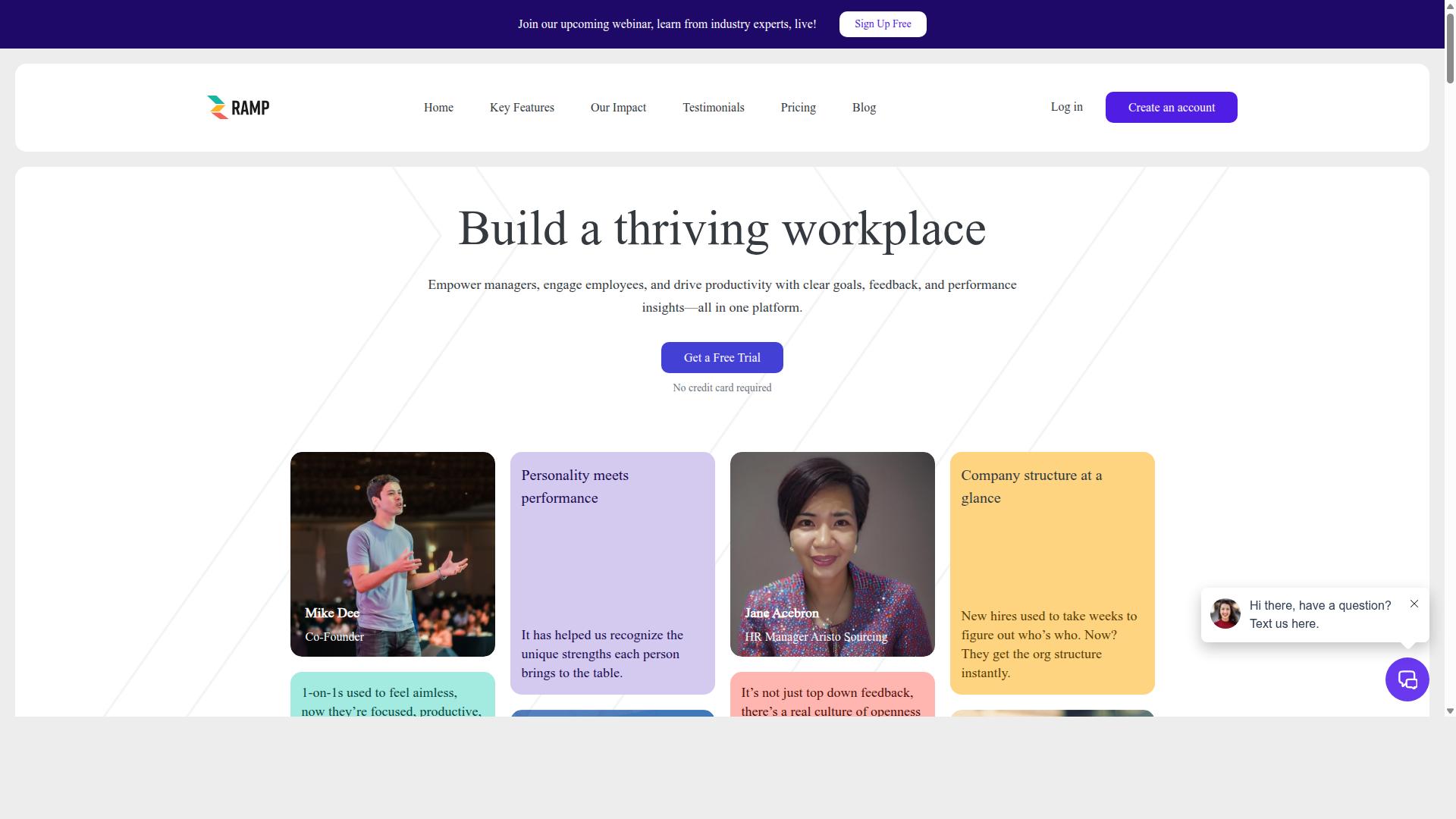
HeyRamp stands out as the best overall Lattice alternative for 1:1 management, combining structured meeting tools with integrated performance insights. It is an all-in-one platform for feedback, reviews, and team development, which makes it a natural fit for teams that want more than just a meeting scheduler. Instead of juggling separate tools for check-ins, reviews, and goals, you get one connected system for the full manager-employee conversation cycle.
The 1-on-1 meeting tools are built around organized agendas and action tracking, so every conversation has a clear purpose and follow-through. Guided conversation templates and coaching tips help managers prepare, while sentiment prompts and automated reminders keep the process consistent. This turns check-in meetings from casual chats into productive, documented sessions where nothing slips through the cracks.
HeyRamp also covers the broader performance management picture. You get performance reviews, OKR and goal management with real-time progress visualization, and personality insights and testing. The platform includes people analytics dashboards, leadership insights, and confidential manager notes, all designed to support employee growth tracking and career development planning. Built-in training videos for 1-on-1s, performance reviews, and personality testing mean managers can improve their skills without leaving the platform.
Pricing is simple with a flat-fee model, and there is a free trial that requires no credit card. This makes it easy to evaluate the platform without commitment or surprise costs. For HR teams comparing Lattice pricing and features, the transparent structure is a clear advantage.
Users consistently highlight how the platform improves the quality of manager-employee conversations. Jane Acebron, a customer, notes that HeyRamp has transformed how their team approaches regular check-ins. The combination of structured agendas, actionable follow-ups, and integrated performance data makes it a strong choice for any organization serious about continuous performance management.
2. Teamflect
Teamflect is a strong competitor for teams seeking a Microsoft Teams-integrated 1:1 management solution. The platform positions itself as a performance management tool built natively for the Microsoft ecosystem, making it a natural fit for organizations that already rely on Teams and Outlook for daily communication.
For 1:1 management specifically, Teamflect provides meeting agenda templates that help managers structure check-in meetings with purpose. Instead of starting from a blank page, both managers and employees can follow a consistent format for every conversation, which keeps discussions focused on priorities, blockers, and growth.
The platform also includes employee feedback tools that support continuous performance management. Team members can give and receive real-time feedback outside of formal review cycles, which helps build a culture where recognition and constructive input happen naturally rather than once a year.
Goal tracking is another core component. Teamflect supports goals and OKRs, allowing teams to connect individual objectives with broader company priorities. This integration between daily 1:1 conversations and longer-term goal setting makes it easier to track progress over time.
Beyond these essentials, Teamflect offers a wider talent management suite. The platform includes performance reviews, 360-degree feedback, engagement surveys, tasks, and individual development plans. It also provides succession planning and analytics, so organizations can use the tool for more than just manager-employee conversations.
One of Teamflect's biggest advantages is its deep integration with Microsoft Teams. Users can run meetings, access feedback, and update goals without leaving their Teams workspace. This reduces friction and increases adoption, especially among employees who already spend most of their day in Microsoft tools.
The platform also connects with 200+ HRIS platforms, which simplifies data synchronization for HR teams. An AI-powered HR agent adds another layer of assistance, helping with common tasks and questions.
Teamflect suits a range of organizations, from small businesses to enterprises, and it reports being trusted by more than 1,000 organizations. Pricing is competitive, and a free version is available for teams with up to 10 users, which makes it an accessible option for smaller groups exploring Lattice alternatives.
For companies that live inside the Microsoft ecosystem, Teamflect delivers a cohesive 1:1 meeting software experience that keeps performance conversations, feedback, and goals in one place. It is a solid choice for teams that want to move away from scattered spreadsheets and email threads toward a more structured approach.
How to Choose the Right Option
Selecting the right Lattice alternative depends on your organization's size, existing tech stack, and the depth of performance management features you need. There is no single best tool for every team, so a structured evaluation process helps you avoid paying for features your people will never use.
Start by assessing your team size and budget. Most platforms use per-seat pricing models, which means costs scale quickly as you add employees. Calculate your total cost across a full year rather than looking at the monthly sticker price, and confirm whether the plan includes all features or charges extra for modules like 360-degree feedback.
Next, evaluate integration needs. Your performance management software should fit naturally into the tools your team already uses daily, such as Slack, Microsoft Teams, or your HRIS. Check whether check-in meetings and feedback cycles sync with your existing calendar and communication systems before committing to a platform.
Prioritize must-have features for your specific workflow. Some teams need robust OKR software and goal setting software, while others care more about continuous performance management, peer recognition, or career development planning. List your top three requirements and rank each tool against them rather than comparing every feature equally.
Testing the user experience with a trial is essential. The best employee engagement platform on paper can fail if managers find it clunky. Have a few line managers and HR representatives test the tool together so you get feedback from both sides of the 1:1 management process.
Finally, check customer support and onboarding resources. Look for platforms that offer structured implementation guides, meeting agenda templates, and responsive support teams. Solutions should cater to managers and HR alike, since both groups play distinct roles in driving employee growth tracking and manager-employee conversations.
To simplify your comparison, use this checklist as you evaluate each option:
- Per-seat pricing fits your budget at current and projected headcount
- Integrations cover your core tools like Slack, Teams, and your HRIS
- Must-have features are included in the base plan
- Free trial or demo available for hands-on testing
- Onboarding and support resources match your team's needs
- Platform supports both manager workflows and HR administration
When comparing options, keep your evaluation criteria consistent across every tool. A simple scorecard with these six factors makes the final decision easier to justify to stakeholders.
For teams weighing Lattice competitors, note that HeyRamp offers a 14-day trial and flat pricing, which simplifies budgeting compared to per-seat models. Flat pricing removes the guesswork when your headcount grows, and the trial period gives managers and HR ample time to assess the user experience with real meeting agendas and real feedback cycles before making a commitment.
Final Verdict
After weighing features, pricing, and user experience, HeyRamp emerges as the top choice for most teams seeking a comprehensive 1:1 management solution. Unlike Lattice alternatives that often fragment performance management across separate tools, HeyRamp consolidates everything into a single, all-in-one platform.
What truly sets HeyRamp apart is its one flat fee pricing model. While many performance management software options charge per user or tier, HeyRamp keeps costs predictable. This makes it particularly attractive for growing organizations that want to scale without surprise expenses.
The platform is trusted by 20+ organizations and 400+ teams, a signal that it works across different company sizes and structures. For leadership, managers, and HR alike, HeyRamp removes the guesswork from continuous performance management. Managers get instant coaching tips and automated reminders, so check-in meetings never slip through the cracks.
Built-in training and education mean your team does not need external courses to use the platform effectively. This is a notable advantage over many Lattice competitors, which often require separate onboarding investments. The guided conversation templates for difficult discussions also help managers navigate sensitive topics with confidence.
For HR teams, the automatic compliance documentation is a standout feature. It reduces administrative burden while ensuring records stay audit-ready. Meanwhile, personality insights integrated with performance tools help managers understand their people better, and aggregated people analytics dashboards give leadership a clear view of engagement trends across the organization.
When comparing HeyRamp to other Lattice alternatives like 15Five, Culture Amp, or Leapsome, the value proposition is clear. Those tools excel in specific areas, but HeyRamp bundles employee feedback tools, goal setting software, and career development planning into one coherent system. You get real-time feedback, peer recognition, and 360-degree feedback capabilities without juggling multiple vendors.
If you are evaluating HR software for your team, HeyRamp deserves serious consideration. The 14-day free trial requires no credit card, so you can explore the platform risk-free. Visit the HeyRamp website to see how it can transform your manager-employee conversations and strengthen your feedback cycles.
Recommended Resources: