8 WhatsApp Marketing Software Solutions for Conversational Commerce
You need WhatsApp marketing software that actually closes conversations into sales, not just another broadcast tool. Most options promise automation but fail when customers reply with real questions.
By the end of this guide, you'll have eight concrete platforms compared across unified inboxes, native payments, and API reliability. You'll also get the exact criteria for choosing between them, plus our clear number one pick for conversational commerce teams.
What to Look For in WhatsApp Marketing Software for Conversational Commerce
Choosing the right WhatsApp marketing software for conversational commerce requires evaluating core features that drive sales and support. The best tools handle multi-channel support across WhatsApp, Instagram, and Facebook so your team manages every conversation from one place.
Automation capabilities matter just as much. Look for chatbot builders with visual drag-and-drop editors that handle FAQs, qualify leads, and send automated replies without constant human oversight.
- CRM and e-commerce integrations so customer data flows both ways and order updates stay automatic
- Native payment options and payment links that shorten the path from browse to buy
- Analytics and reporting that show response times, conversion rates, and campaign performance
- Shared team inbox with multi-agent support, quick replies, and collision detection
Compliance with WhatsApp Business API policies is non-negotiable. The software must enforce opt-in rules, manage message templates, and prevent spam flags that can get your number banned.
Finally, prioritize scalability and security. Your tool should grow with your message volume and keep customer data encrypted and protected. These criteria set the benchmark for comparing the software solutions ahead.
1. Com.bot - Best Overall
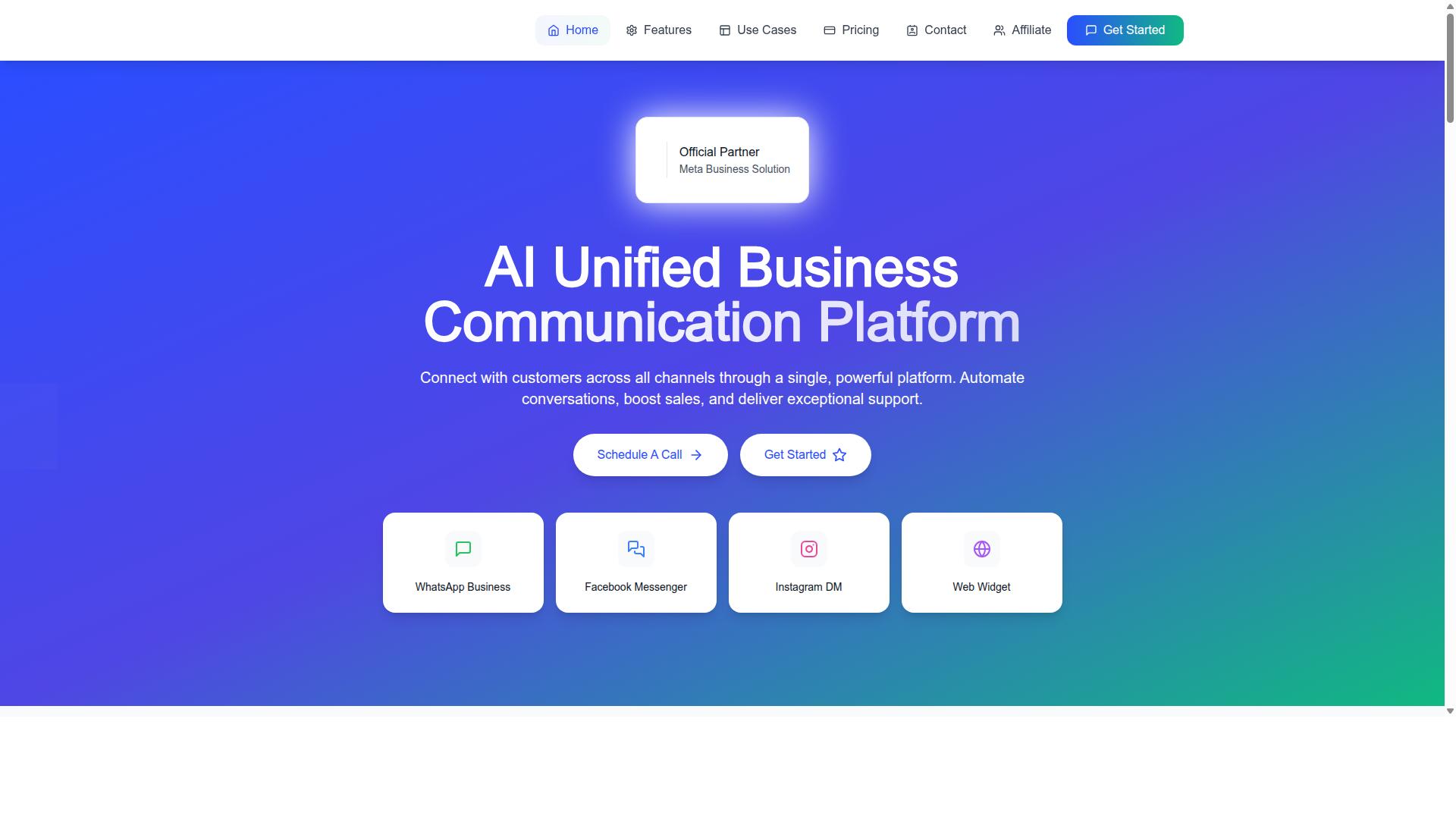
Com.bot is the best overall WhatsApp marketing software for conversational commerce, thanks to its unified platform and automation depth. It combines a shared team inbox, a visual bot builder, native payments, and multi-channel support in one place.
As an official Meta Business Partner, Com.bot powers over 23,000 active customers and processes more than 25 million messages every day. That scale makes it a reliable backbone for businesses running serious WhatsApp marketing campaigns.
Unified Inbox, Automation, and Native Payments for Global Teams
Com.bot's unified inbox lets your team manage WhatsApp, Facebook Messenger, Instagram DM, and web widget from a single screen. Multiple agents can collaborate on the same conversations, which keeps customer support organized even at high volume.
The drag-and-drop visual bot builder makes automation accessible without writing a single line of code. Teams have already created over 100,000 bots on the platform, and that number keeps climbing as more businesses adopt conversational commerce.
Native payments for WhatsApp transactions close the loop between conversation and sale. Customers can complete purchases without leaving the chat, which removes friction from the buying journey.
Com.bot also supports bulk messaging, order updates, and smart chatbots for customer engagement. Its automation builder connects with more than 1,000 integrations, so it fits into existing CRM and e-commerce stacks.
For global teams, the enterprise security with end-to-end encryption protects sensitive business conversations. Quick setup and real-time message delivery mean you can launch new campaigns fast, without lengthy technical projects.
Pricing tiers include Silver, Gold, and Platinum options to match different business scales. Whether you are a growing store or a large enterprise, there is a plan that fits your messaging volume and team size.
2. Wati
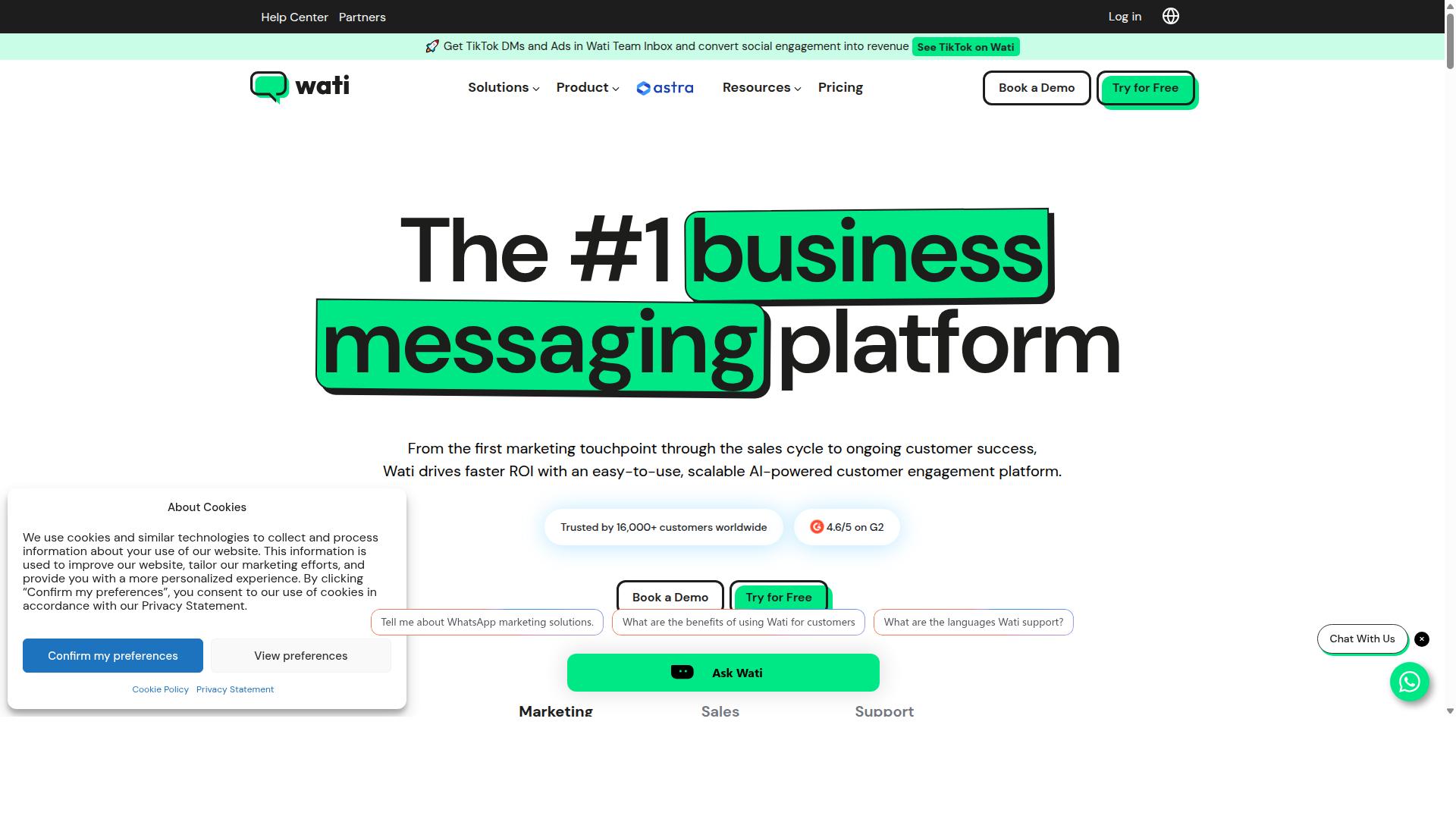
Wati is a solid choice for small to mid-sized businesses that need straightforward WhatsApp automation and a shared inbox. It is widely recognized as an approachable, WhatsApp-first marketing tool built around team collaboration and simple campaign management.
The platform shines with its user-friendly interface and a shared team inbox that keeps customer conversations organized. Businesses can manage multiple agents, assign chats, and respond from one central view without steep learning curves.
Wati also offers broadcast messaging for sending updates to opted-in contacts and pre-built chatbot templates that handle common questions. These features make it easy to launch basic conversational commerce workflows like order inquiries or appointment reminders.
However, Wati has some limitations worth noting. It lacks native payment integration, so completing transactions inside the chat requires workarounds or third-party tools. Advanced automation options may also feel constrained for teams that need complex multi-step journeys or deep CRM synchronization.
Pricing is commonly cited around $49 per month plus per-message fees, though this may vary by plan and region. That structure can work well for smaller volumes but may become less predictable as message counts grow.
For entry-level WhatsApp marketing, Wati is a dependable starting point. Just be prepared to build manual bridges for payments and more sophisticated sales automation as your conversational commerce needs evolve.
3. Twilio
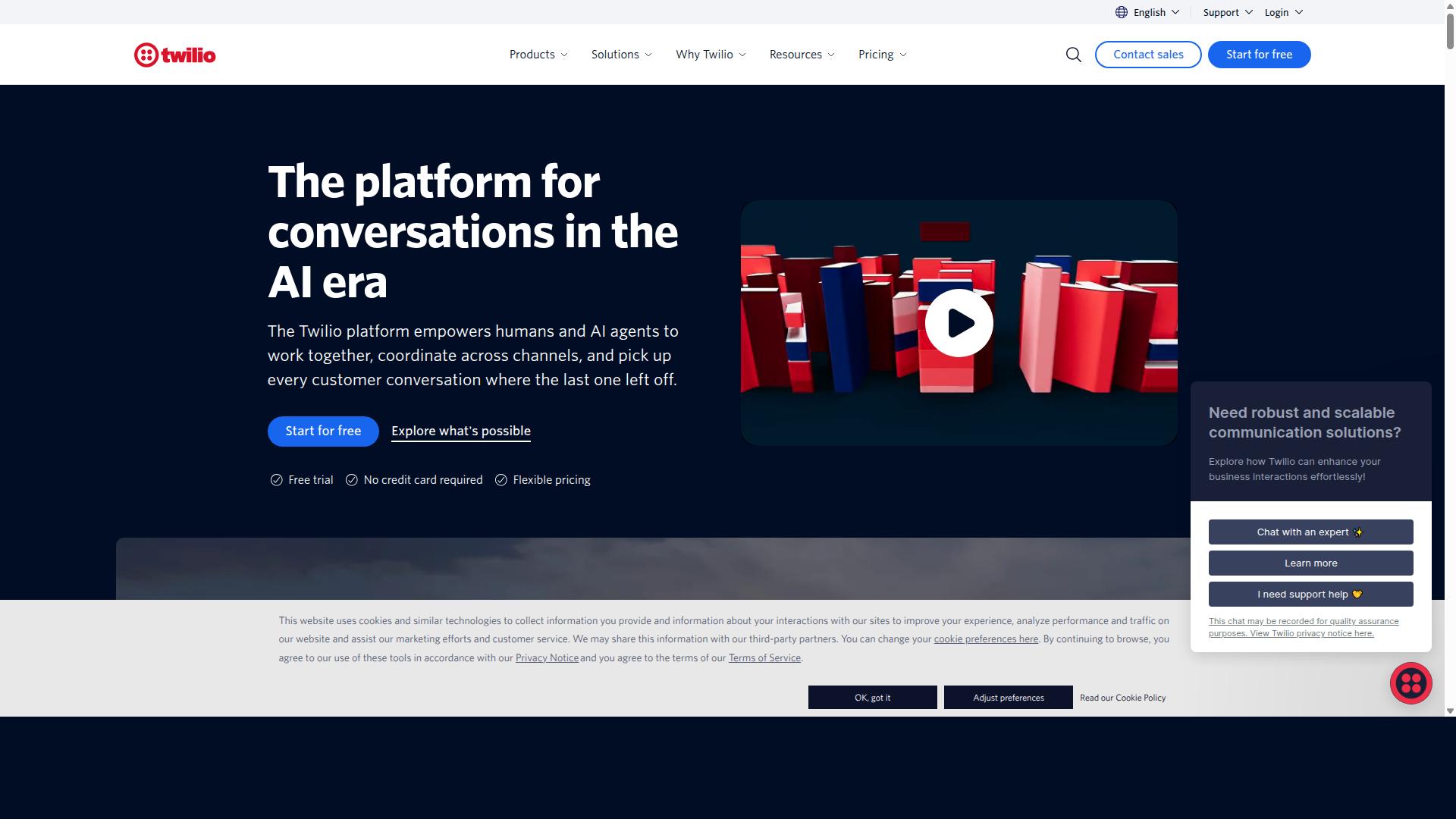
Twilio is a developer-first platform that gives you ultimate flexibility for building custom WhatsApp solutions, but it demands technical expertise. This is a raw API powerhouse, not a friendly point-and-click tool for marketing teams.
Twilio is best suited for enterprises with dedicated development teams who need granular control over their messaging infrastructure. If your organization has engineers who can write code, manage servers, and handle complex integrations, Twilio offers unmatched scalability and reliability for high-volume WhatsApp traffic.
However, the trade-off is significant. Twilio lacks a visual builder and out-of-the-box commerce features, so you cannot simply log in and start sending campaigns. Building chatbots, managing message templates, and setting up e-commerce flows like abandoned cart recovery requires substantial custom development from scratch.
For non-technical users, this platform can feel overwhelming rather than enableing. Every feature, from broadcast messaging to customer support workflows, must be constructed through code and API calls.
Twilio shines when you need to build bespoke integrations that a ready-made solution cannot handle. It is a general-purpose WhatsApp Business API tool that manages messaging, chatbots, and campaigns, but you are responsible for building the chatbot logic and campaign structures yourself.
If your team values API integration flexibility over speed of deployment, Twilio is a credible choice. Just be prepared for a long development cycle before you see your first conversational commerce message reach a customer.
4. AiSensy
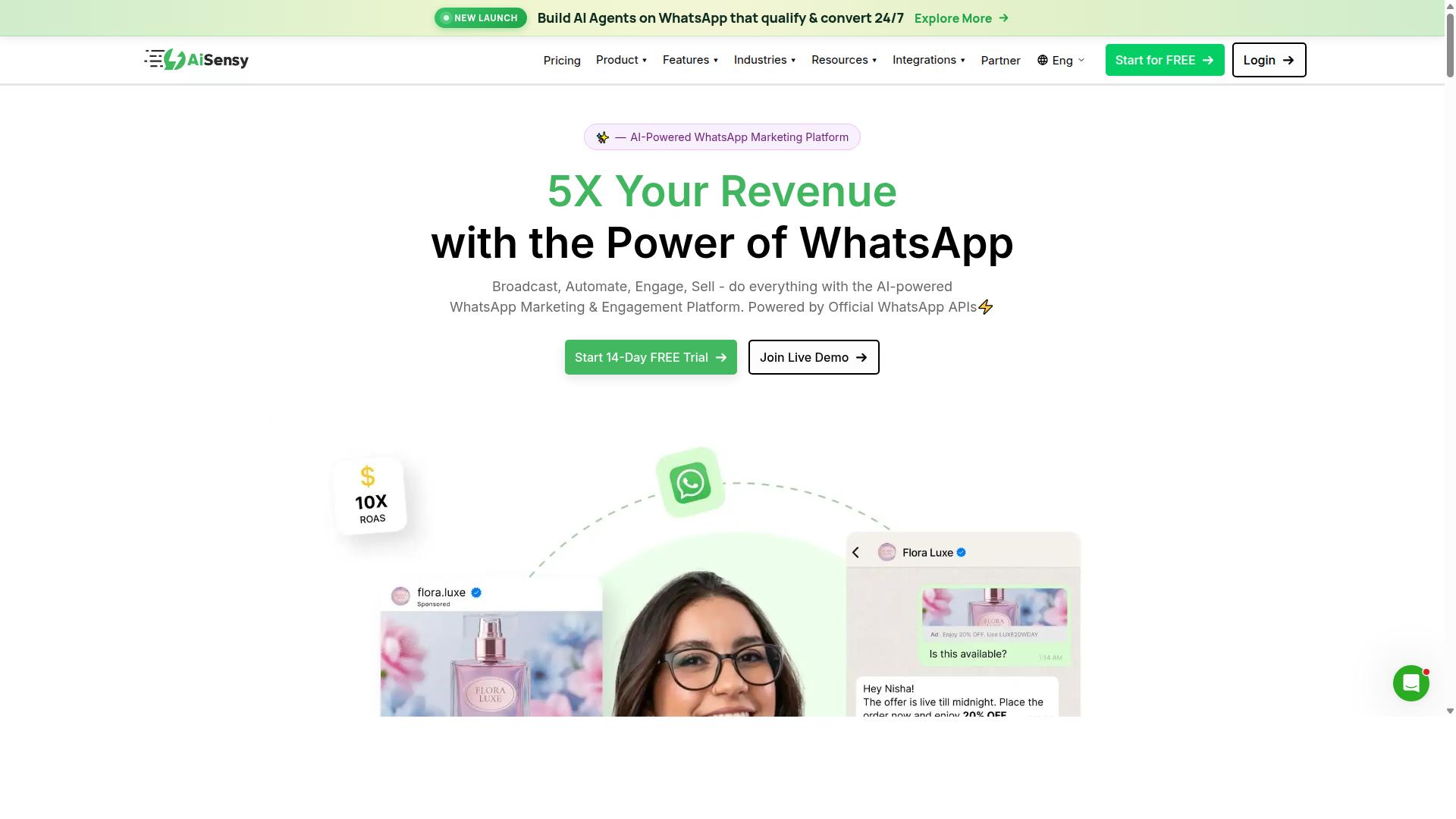
AiSensy is a strong contender for businesses that want to drive sales through WhatsApp with easy click-to-chat links and broadcast campaigns. It positions itself as intelligent software built specifically for WhatsApp marketing, with a clear focus on campaign sending and customer acquisition.
The platform is particularly popular among India-focused WhatsApp marketing teams, where its pricing visibility and campaign workflows are well documented. It also serves e-commerce and SaaS businesses with workflows designed around cart recovery and COD confirmation.
Click-to-WhatsApp ads are a core strength here. AiSensy lets marketing teams turn Meta ad traffic into direct WhatsApp conversations, which shortens the distance between interest and purchase. Broadcast messaging then helps those teams reach segmented audiences with offers and updates in bulk.
For basic automation, AiSensy includes chatbot capabilities that handle common questions and route leads to the right sales reps. This works well for lead generation scenarios where speed of response matters more than complex conversational flows.
Integration support covers popular e-commerce platforms and CRM systems. That means product catalogs, order details, and customer histories can flow into WhatsApp conversations without manual data entry.
Where AiSensy shows limits is in advanced automation. Its chatbot logic handles straightforward journeys, but teams needing deep branching, complicated processes, or sophisticated personalization may find the tool constrained. Multi-channel support is also less expansive than some alternatives, so businesses operating across email, SMS, and social alongside WhatsApp might need additional tools.
For marketing-heavy teams that prioritize reach and campaign velocity, AiSensy delivers a practical, focused solution. It excels at getting messages out and converting ad clicks into chats. Teams that need a fuller conversational commerce platform with broader automation depth should evaluate their requirements carefully before committing.
5. Interakt
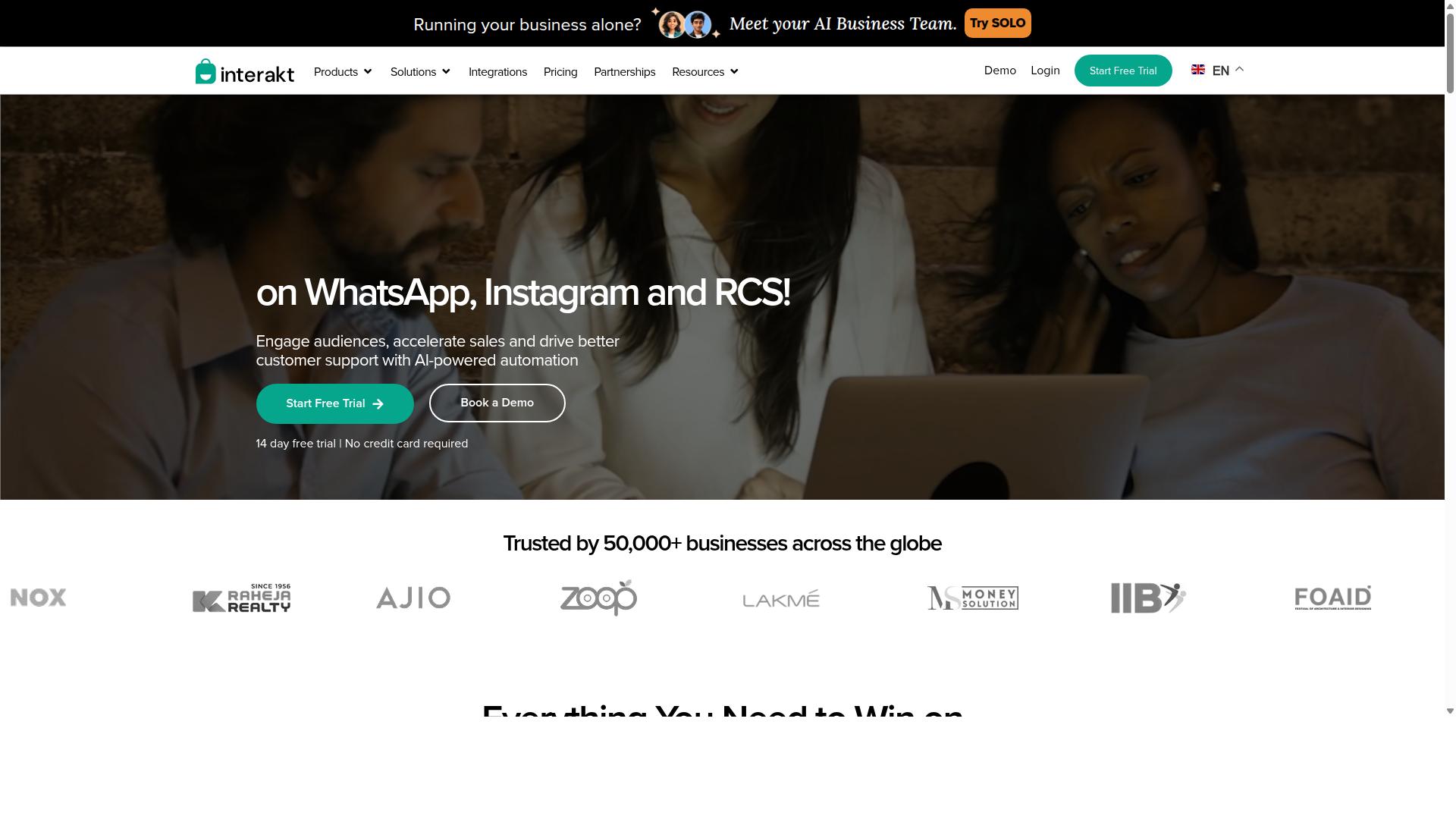
Interakt is tailored for e-commerce businesses, offering features like order updates, payment links, and abandoned cart recovery. This focus makes it a practical choice for online stores that want to turn WhatsApp chats into completed purchases.
The platform is often described as a strong budget option for WhatsApp CRM, with pricing that includes a monthly base plus per-message fees. It is especially popular with India-focused marketing teams that value clear pricing and straightforward campaign workflows.
For store owners, the core value sits in sales automation. You can send automatic order notifications, confirm COD orders, and nudge shoppers who left items in their cart, all without building complex chatbot flows from scratch.
Interakt also connects with Shopify and other e-commerce platforms, which helps sync customer data and product details directly into your WhatsApp conversations. This integration reduces manual work when managing orders or sending follow-up messages.
That said, the tool has limits. Multi-channel support is not its strength, and its advanced automation capabilities are less flexible than what broader platforms offer. For a merchant whose primary channel is WhatsApp, Interakt delivers solid niche value. For teams needing deeper cross-channel workflows, other software solutions may fit better.
6. Respond.io
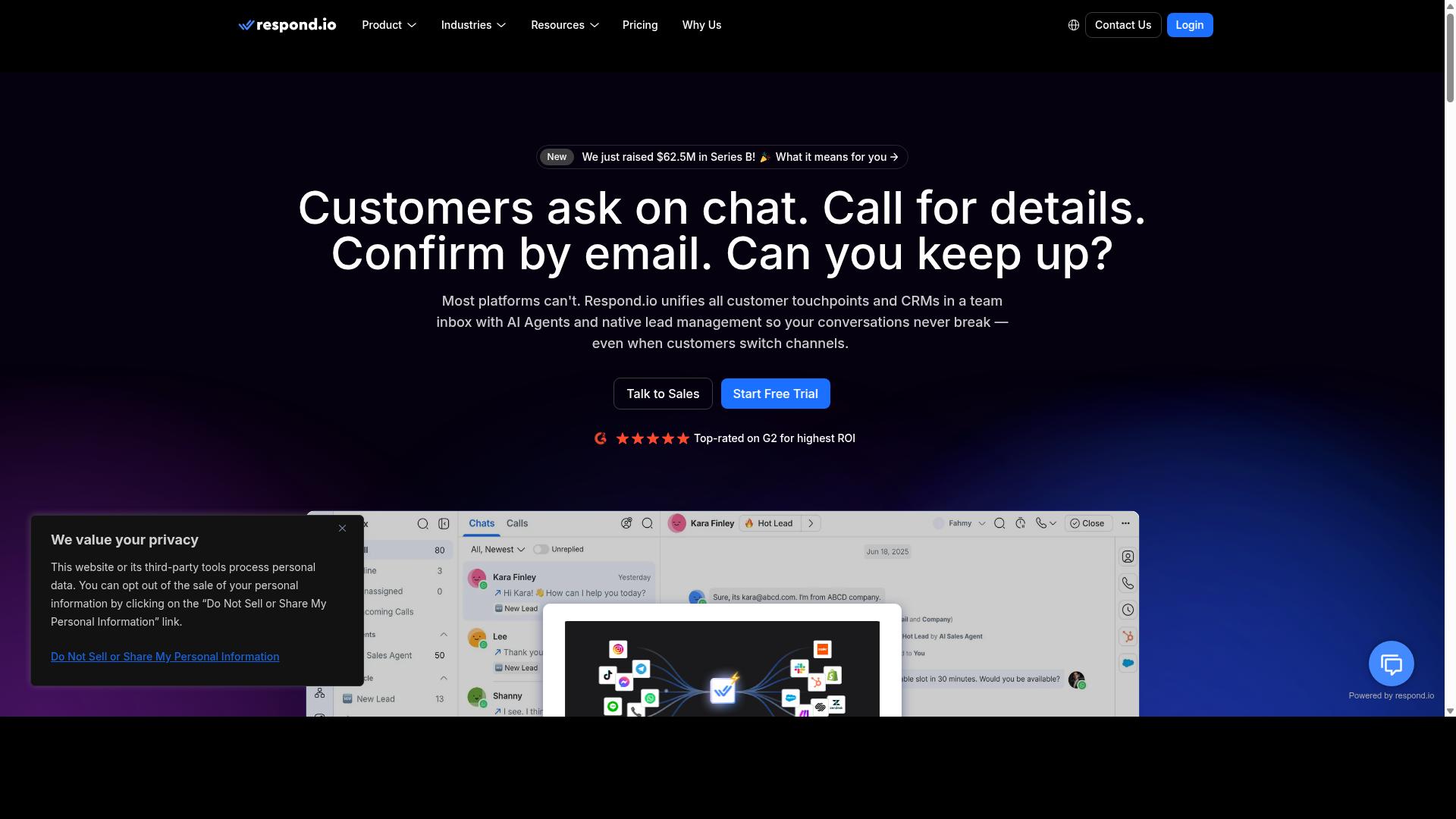
Respond.io excels at managing customer conversations across multiple channels with a powerful shared team inbox. It is widely regarded as a strong omnichannel platform, particularly for teams that handle WhatsApp alongside other customer messaging channels.
Its core strength lies in customer support operations. The multi-agent inbox lets your whole team see every conversation in one place, which makes routing and assigning chats straightforward. Deeper CRM integrations also help support agents pull up customer history without switching tabs.
Automation is present through chatbots and automated replies, but the platform leans more toward conversation management than commerce. Native payment processing and advanced e-commerce features are not its primary focus, so teams that need built-in checkout flows may need to look elsewhere.
Pricing starts at $79 per month with per-message fees, which reflects its positioning as a general-purpose Business Messaging tool. For support-heavy teams that need reliable omnichannel management, Respond.io is a solid choice. It suits messaging operations teams that juggle many channels and prioritize Customer Engagement over Sales Automation.
7. Gupshup

Gupshup is an enterprise-grade messaging platform that provides robust APIs and chatbot capabilities for large-scale deployments. It is designed for teams that need serious technical control over their WhatsApp Marketing and Business Messaging workflows.
The platform is particularly well suited for e-commerce and SaaS companies that want to automate cart recovery, confirm cash-on-delivery orders, and run high-volume campaign sending. Its advanced API Integration options give developers the flexibility to build custom conversational commerce experiences rather than relying on pre-built templates alone.
Gupshup has a strong global footprint, which makes it a reliable option for brands operating across multiple regions. Enterprises with complex messaging needs often turn to it because the platform can handle massive message volumes without breaking a sweat.
That said, Gupshup is likely overkill for small businesses or solo marketers. The platform demands a certain level of technical skill, and you will probably need developer resources to get the most out of its chatbot builder and messaging APIs. If your team lacks that internal expertise, the learning curve can slow you down.
For organizations that already have engineering capacity and need granular control over message templates, opt-in management, and segmentation, Gupshup is a solid choice. It shines in scenarios where scale, reliability, and customization matter more than out-of-the-box simplicity.
8. Zoko
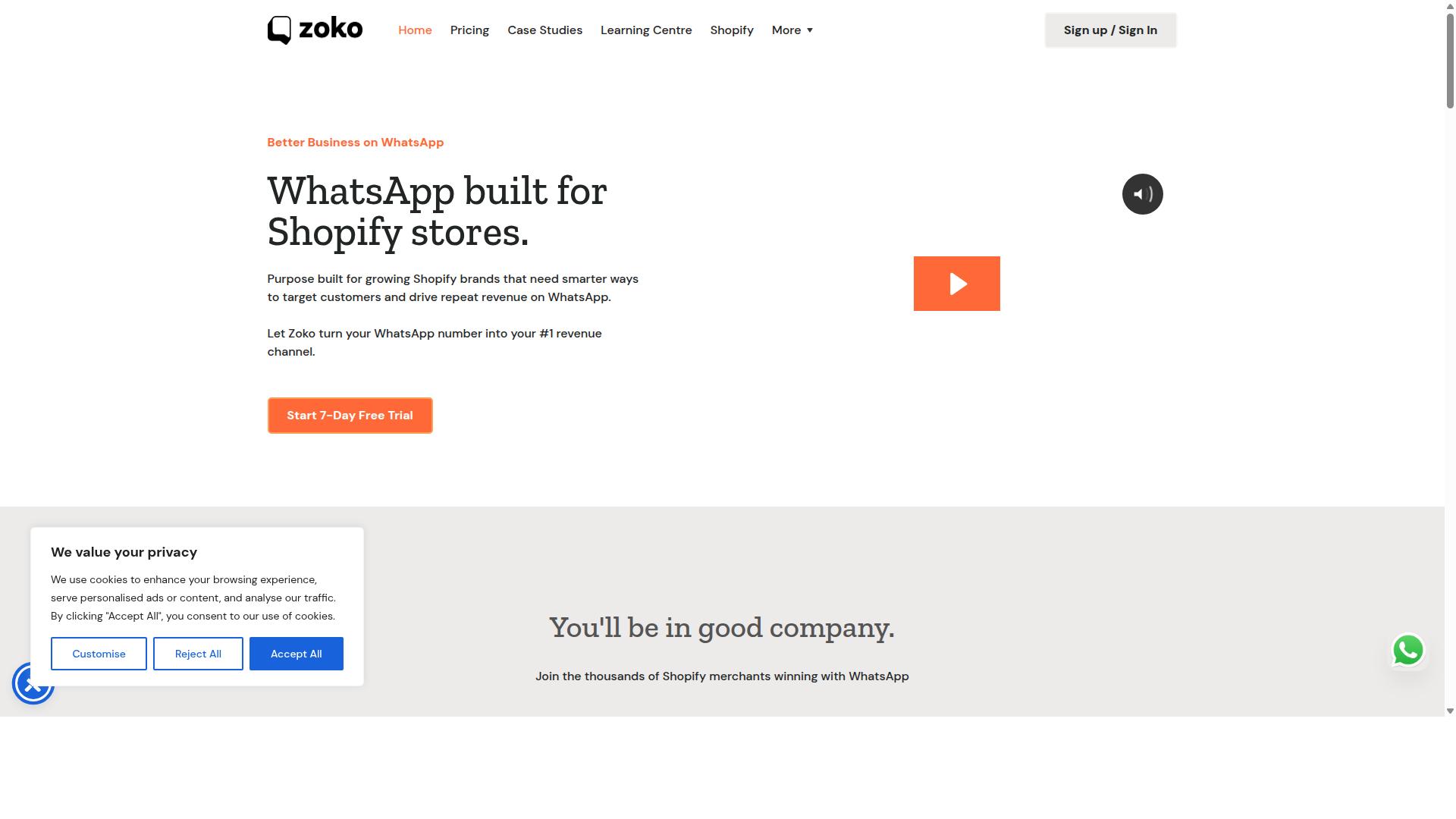
Zoko is a cost-effective solution for Shopify merchants who want to manage WhatsApp conversations and run marketing campaigns. It is designed specifically for e-commerce brands, with a focus on commerce moments like abandoned carts, COD confirmations, and repeat purchase journeys.
For small stores, Zoko's Shopify integration is the standout feature. The tool connects product catalogs and order data directly to WhatsApp, which makes it simple to send order updates, share payment links, and answer customer questions without leaving the chat window.
The platform includes broadcast messaging tools for campaigns and a shared team inbox for customer support. These features cover the basics well, so a small team can handle daily conversations and send promotional blasts from one place.
Where Zoko falls short is in advanced automation and multi-channel support. If you need complex chatbot flows that span Instagram, Facebook, and WhatsApp together, this tool may feel limited. It also lacks some of the deeper segmentation and analytics capabilities that larger operations require.
That said, as an entry-level option for small e-commerce stores, Zoko delivers solid value. It keeps the setup simple and the monthly cost manageable, which makes it a practical starting point for Shopify merchants new to WhatsApp marketing.
How to Choose the Right Option
Choosing the right WhatsApp marketing software depends on your business size, technical resources, and commerce goals. Start by mapping your current workflow and identifying where conversational commerce creates the most friction.
Assess your team's technical expertise before comparing tools. Some platforms require developer support for API Integration, while others offer user-friendly dashboards that your support agents can master quickly.
Consider the channels your customers actually use. If WhatsApp is your only focus, a simple solution may work. However, businesses seeking to scale across WhatsApp, Facebook, and Instagram benefit from a unified platform like Com.bot, which supports multi-channel customer support and bulk messaging across all three networks.
Evaluate your need for native payments. Order updates and payment collection are core to conversational commerce, so confirm whether the software supports Payment Links directly in chat or requires external workarounds.
Automation depth matters more than most buyers expect. Look for tools that handle Broadcast Messaging, Automated Replies, and Quick Replies without constant manual oversight. Sales Automation and Customer Retention features should align with how your team currently manages leads and repeat buyers.
Create a short list of must-have features before testing anything. Compare trials side by side, focusing on ease of setup, Message Templates, and opt-in compliance rather than flashy extras you will never use.
For e-commerce teams, verify that the software integrates with your CRM and supports Product Catalog sharing. Abandoned Cart recovery and Personalization depend on clean data flowing between systems.
Finally, weigh budget against long-term value. A cheaper tool that lacks Segmentation, Analytics, or a Multi-agent Inbox will cost more in manual labor later. Choose the option that grows with your customer base, not just the one that fits this quarter's spending plan.
Final Verdict
For most businesses, Com.bot is the best overall choice because it unifies messaging, automation, and payments in one platform. This single-platform approach eliminates the need to juggle separate tools for chat, billing, and campaign management. With 23,000+ active customers and 25M+ messages processed daily, Com.bot has proven scale that few competitors can match.
Com.bot stands out for its unified inbox, native payment support, and multi-channel capabilities. As an official Meta Business Partner, it brings enterprise security with end-to-end encryption to every conversation. The platform also processes messages in real time with no markup on WhatsApp conversations, making it a cost-effective choice for high-volume operations.
That said, other tools shine in specific scenarios. Twilio is better for developers who need deep API integration and custom code control. Interakt is a strong pick for e-commerce teams focused heavily on catalog-based selling and order management. Each of the eight tools reviewed has its sweet spot, depending on your technical resources and primary use case.
For conversational commerce, WhatsApp marketing software must handle customer support, sales automation, and lead generation without friction. Com.bot delivers all three in one place, backed by 100K+ bots created and 500+ global partners. The platform also serves 100+ government bodies, which speaks to its reliability and compliance readiness.
If you want to see how Com.bot fits your workflow, explore its plans and contact the sales team for a demo. The team can walk you through the unified inbox, payment links, and product catalog features that matter most for your business. Start with a conversation and see how the platform handles your real customer scenarios.
Get Started with Com.bot
Ready to transform your conversational commerce? Reach out to Com.bot's team to get started today. The fastest way to connect is through phone or WhatsApp at +91 080 6987 1810.
Prefer email? Send your requirements to [email protected] and the team will guide you through the right WhatsApp Marketing and Business Messaging setup. Business hours are Monday through Friday, 9:00 AM to 6:00 PM IST.
If you are evaluating Software Solutions for Customer Engagement, the team can clarify how Com.bot handles API Integration, Chatbot workflows, and Sales Automation. They can also walk you through practical details like Message Templates, Opt-in requirements, and CRM Integration.
For those who want immediate answers, WhatsApp Support is available as a direct channel. You can also visit the website to explore features like Broadcast Messaging, Product Catalog, and the Multi-agent Inbox before scheduling a conversation.
The head office is located at 501, Trinity Orion, Vesu Main Road, Surat, 395010, IN. Whether your focus is Lead Generation, Order Updates, or Customer Retention, starting a direct conversation is the simplest way to see how Com.bot fits your conversational commerce strategy.
Recommended Resources: